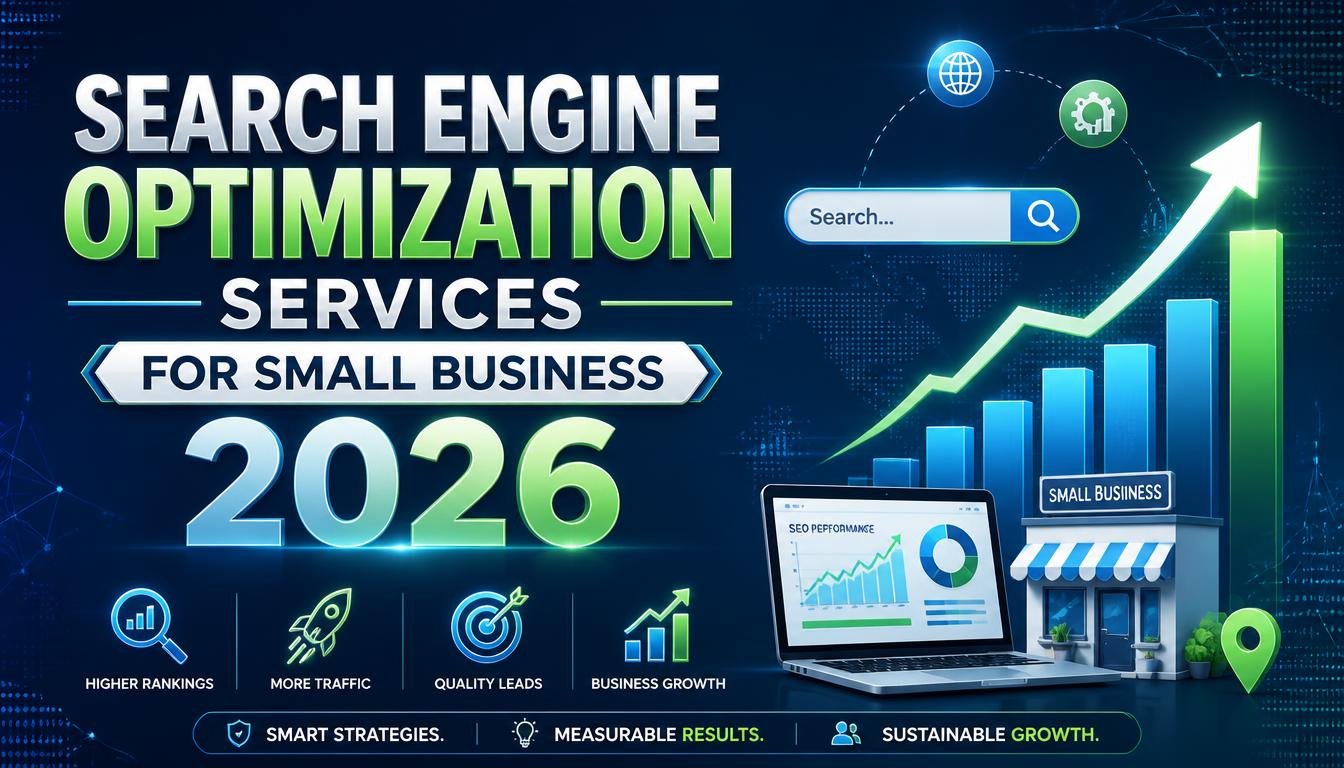
Search Engine Optimization Services for Small Business 2026
Investing in search engine optimization services for small business 2026 is no longer just a digital marketing checkbox; it is a fundamental survival strategy for local growth. As search algorithms evolve to prioritize intent and accuracy, small firms must pivot from keyword-stuffing to providing genuine, human-centered value.
This article examines the current state of search visibility, helping you determine how to allocate your budget and select the right partners to maintain a competitive edge. You will learn about the shifting landscape of local discovery, the impact of artificial intelligence on organic rankings, and how to identify professional services that actually move the needle for your bottom line.
The Financial Reality of SEO Investment
Many owners ask exactly how much they should spend on search engine optimization services for small business 2026. While there is no single industry-wide flat rate, most reputable agencies offer tiered packages tailored to specific growth stages.
Small businesses typically see monthly retainers ranging from $500 for basic local optimization to $3,000 or more for comprehensive content and technical strategies. You should view this spend as a long-term capital investment rather than an immediate expense.
The cost depends heavily on your industry’s competitiveness and your geographic footprint. A local coffee shop requires a different strategy than a specialized legal practice or a boutique e-commerce brand.
When evaluating quotes, look for transparency regarding how much of your budget goes toward labor versus software tools. If an agency cannot explain the specific activities they will perform, you are likely overpaying for generic promises.
Budgeting for Sustainable Growth
It is wise to align your SEO budget with your customer acquisition costs. If a new client brings in $500 in profit, spending $200 to acquire them through search is a sound financial decision.
Avoid “cheap” services that promise top-three rankings for $99 a month. These offers often rely on outdated, high-risk tactics that can lead to permanent penalties from search engines.
| Service Level | Estimated Monthly Range | Primary Focus |
|---|---|---|
| Basic Local SEO | $500 – $1,000 | Google Business Profile, NAP consistency |
| Mid-Market Growth | $1,500 – $3,000 | Content creation, technical audits, link building |
| Enterprise/Competitive | $3,500+ | National scale, advanced PR, custom data strategy |
Why Local Search Remains a Priority
Local SEO is the bedrock of success for brick-and-mortar operations in 2026. Search engines are increasingly moving toward “hyper-local” results that prioritize proximity and user reviews above all else.
If you are not appearing in the map pack for your primary service area, you are essentially invisible to the most motivated buyers. Optimizing your Google Business Profile is the single most effective action you can take to capture this high-intent traffic.
Focus your energy on gathering authentic reviews and keeping your business hours accurate. When a potential customer searches for a service “near me,” they are looking for immediate solutions.
Ensuring your website has clear, localized landing pages for the specific neighborhoods you serve will further boost your relevance. This approach creates a strong, defensible moat around your local market share.
Read More: Droven io AI News Guide 2026: Trends, Breakthroughs, and Future Impact
The Impact of Artificial Intelligence
The rise of generative AI has fundamentally altered the search experience. Users now receive direct answers from AI-powered interfaces, which means they may not click through to your website as often as they did in the past.
Your strategy must shift from answering simple questions to providing deep, authoritative insights that AI models cannot easily replicate. By positioning your business as a primary source of industry expertise, you remain valuable even as search behavior changes.
Focus on creating content that reflects your unique experience and local perspective. AI can summarize general facts, but it cannot emulate the nuance of a business owner who has served a specific community for years.
Use your website to showcase case studies, customer stories, and local project portfolios. These assets are difficult for scrapers to mimic and provide the trust signals that potential clients seek before making a purchase.
Selecting the Right Agency Partner
Finding the right partner for search engine optimization services for small business 2026 requires careful vetting. Avoid agencies that promise guaranteed rankings, as no one can control how search engines update their algorithms.
Instead, look for partners who emphasize data-driven reporting and transparent communication. A good agency will be able to show you clear metrics, such as growth in organic traffic, improvements in keyword positioning, and increases in qualified leads.
Ask potential partners for examples of their work with businesses of a similar size to yours. A firm that specializes in global e-commerce might not have the right expertise for a local service-based company.
Ensure that they understand your specific industry challenges and have a clear process for content production and technical maintenance. You want a partner who acts as an extension of your internal team rather than a distant vendor.
- Request a detailed audit of your current site health before signing a contract.
- Ask for references from current clients in similar industries.
- Ensure the contract terms allow for flexibility if your business needs change.
- Verify that the agency uses white-hat techniques that align with Google Search Essentials.
- Confirm who will be your primary point of contact for strategy meetings.
Content Strategy in a Competitive Market
Great content is the fuel that keeps your search engine presence alive. In 2026, quality beats quantity by a wide margin.
Instead of churning out generic blog posts, focus on creating deep, helpful guides that address the specific pain points of your customers. If you are a plumber, write a comprehensive guide on identifying common water leaks; if you are a consultant, share insights into solving specific industry problems.
This content should be structured to be easily readable and highly useful for your target audience. Use short paragraphs, clear headings, and internal links to guide users through your site.
When you answer a customer’s question thoroughly, you build authority and trust. This trust is what ultimately converts a casual searcher into a loyal, paying customer.
Technical Health and Site Performance
Your website’s technical foundation determines how easily search engines can crawl and index your pages. A slow, disorganized, or mobile-unresponsive site will struggle to rank, regardless of how good your content is.
Ensure your technical team or agency prioritizes page load speed, mobile usability, and secure HTTPS connections. These elements are non-negotiable for modern search engines.
Regular audits are necessary to fix broken links, remove duplicate content, and optimize images. Many technical issues are hidden from view but significantly hamper your site’s ability to rank.
By keeping your site lean and fast, you provide a better experience for your users. A better user experience leads to higher engagement, which in turn signals to search engines that your site is worth promoting.
Measuring Success Beyond Rankings
Ranking for a keyword is a vanity metric if it does not lead to revenue. You must track your success based on business outcomes like contact form submissions, phone calls, and actual sales.
Use tools like Google Analytics 4 to monitor where your traffic is coming from and what those users do once they land on your site. Understanding the path to conversion is the key to refining your strategy.
If you notice that a particular landing page gets a lot of traffic but very few leads, it is time to optimize the call to action. Test different headlines, button placements, and offer structures to see what drives better results.
This iterative process of testing and refining is what separates successful businesses from those that stagnate. Always keep your eye on the bottom line rather than just your position in the search results.
The Future of Organic Discovery
The landscape for search engine optimization services for small business 2026 is moving toward a more personalized and integrated experience. Voice search, visual search, and AI-driven discovery are becoming standard parts of the user journey.
Adapting to these trends means ensuring your business information is consistent across all platforms, including social media and local directories. Your goal is to be present wherever your customers choose to search.
Do not be afraid to experiment with new formats like short-form video or interactive tools on your website. These can provide unique value that keeps users engaged longer.
The core principle remains the same: provide the most helpful, accurate answer to the user’s intent. If you stay committed to this, your business will continue to thrive despite the rapid changes in technology.
Frequently Asked Questions
Is SEO still worth the investment in 2026?
Yes, search engine optimization remains one of the most effective ways to drive high-quality, long-term traffic to your business. While the methods have evolved, the need for businesses to be discoverable when customers are searching for solutions is greater than ever.
How much should a small business realistically pay for SEO?
Most small businesses should expect to pay between $500 and $3,000 per month for professional, ethical services. Any price significantly lower than this often suggests a lack of actual effort or the use of risky, outdated tactics that could harm your site.
Is SEO dead because of AI?
SEO is not dead, but it has shifted from a focus on keywords to a focus on authority and intent. AI can answer basic queries, but users still turn to trusted, expert sources for specialized services, local recommendations, and complex problem-solving.
How long does it take to see results?
Significant results from professional SEO efforts typically take between three to six months to become apparent. This is a cumulative process that involves building trust with search engines through consistent, high-quality updates and technical improvements.
What is the most important part of local SEO?
Your Google Business Profile is the most critical asset for local visibility. Keeping this profile updated, accurate, and active with reviews is the single most effective way to rank in the local map pack and attract nearby customers.
Final Thoughts on Growth
The path to success using search engine optimization services for small business 2026 lies in consistency and a commitment to quality. By focusing on your customers’ needs and maintaining a technically sound website, you can build a sustainable stream of organic leads. Remember that this is a long-term investment, not a quick fix.
As you refine your strategy, keep your data at the center of your decision-making and stay adaptable to the changing search environment. Start by auditing your current online presence, identifying your most valuable customer segments, and finding a partner who shares your vision for growth. Your efforts today will lay the foundation for your business’s digital presence for years to come.



One Comment