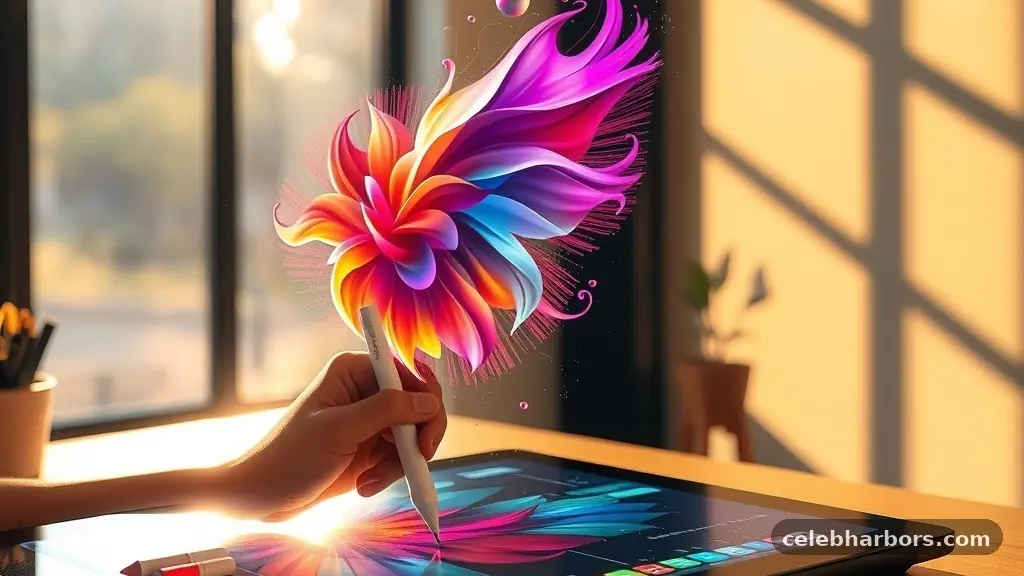
Technology as a Canvas: How Digital Tools Are Transforming Artistic Expression
Viewing technology as a canvas has fundamentally shifted how we define the creative process in the modern era. Where artists once relied exclusively on physical pigments and textured surfaces, they now find themselves operating within virtual environments that offer infinite undo buttons and non-destructive workflows. This evolution doesn’t just change the medium; it alters the very nature of human intent behind every stroke.
By integrating software and hardware into their practice, creators are pushing past the limitations of physics to explore new dimensions of color, light, and form. You will gain a deeper understanding of how these innovations redefine traditional mastery and what the future holds for digital creators.
The Evolution of the Digital Workspace
The transition from physical studios to digital interfaces represents a massive leap in how we approach creative production. Early digital tools were often seen as mere mimicry of traditional methods, attempting to replicate the look of charcoal or oil paint on a screen.
Today, the software has matured into a distinct artistic domain that prioritizes efficiency and experimentation over simple imitation. Artists can now manipulate layers, adjust lighting in real-time, and iterate on concepts without sacrificing raw materials.
This shift is not just about convenience; it is about the expansion of the creative horizon. When the barrier to entry for complex techniques—like blending hundreds of color gradients—is lowered, the artist can focus more on conceptual depth.
The digital workspace allows for a level of precision that was previously only achievable through years of tedious manual labor. Consequently, the speed of iteration has increased, allowing for a more fluid exchange of ideas between the creator and the canvas.
Software as a Modern Palette
Modern digital tools act as the primary interface between imagination and execution. Software suites like Adobe Creative Cloud or Procreate have become the industry standard, providing a vast array of brushes and textures that would cost thousands of dollars to replicate in a physical studio. These digital palettes allow artists to switch between mediums instantly, moving from watercolor washes to sharp vector lines with a single tap.
The advantage of this versatility lies in the ability to save and organize complex workflows. An artist can preserve a specific color palette, brush setting, or layer structure to reuse across multiple projects.
This level of consistency ensures that long-term projects maintain a cohesive visual identity, which is difficult to manage when working with perishable physical supplies. By treating technology as a canvas, creators are effectively building their own personalized environments where every tool is optimized for their unique style.
See More: Is charfen.co.uk Legit? Full Review, Trust Analysis and User Insights (2026)?
The Rise of AI-Generated Art
Artificial intelligence has introduced a controversial yet transformative element into the contemporary art world. AI-generated art relies on machine learning models that process vast datasets to produce images based on text prompts.
This technology forces us to reconsider the role of the human artist in the creative process. While some argue that it diminishes the value of manual skill, others view it as a sophisticated brush that requires a new type of curation and direction.
The impact of this technology is best understood through the lens of collaboration between human intent and algorithmic output. Artists are increasingly using these tools to generate mood boards, explore color variations, or develop complex textures that they then refine by hand.
This hybrid approach allows for a unique synthesis of human emotion and machine-driven complexity. It is not necessarily about the machine replacing the person, but about the person directing the machine to achieve results that were previously impossible to visualize.
Read More: WiseStudySpot .com: What It Is, Topics, Features and How to Use It Safely
Hardware Innovations for Creators
While software provides the environment, hardware provides the tactile connection to the digital work. Pressure-sensitive tablets and high-resolution displays have bridged the gap between the physical hand movement and the digital output.
A stylus now offers the same nuance as a traditional brush, capturing subtle shifts in pressure and angle to create varying line weights. This hardware evolution is essential for maintaining the human touch in a digital-first world.
Beyond standard tablets, virtual reality (VR) and augmented reality (AR) have begun to redefine space itself. Artists are now painting in three-dimensional environments, stepping inside their works to adjust perspective and scale.
This immersion changes the relationship between the viewer and the art, as well as the artist and the work. By removing the frame, creators are exploring new ways to engage the audience through spatial storytelling and interactive design.
Digital Art in the Global Fashion Industry
The integration of digital tools into fashion design has revolutionized how garments are conceptualized and produced. Designers now use 3D modeling software to create digital prototypes, which can be tested for fit and drape before a single piece of fabric is cut. This approach significantly reduces material waste and allows for more daring, complex designs that might be impossible to construct using traditional pattern-making methods.
Digital prints and augmented reality overlays are also changing the way consumers interact with clothing. Brands are experimenting with “digital-only” fashion items that can be worn in virtual spaces or via social media filters.
This trend illustrates how technology as a canvas extends beyond static images to encompass the very clothes we wear. It creates a bridge between our digital identities and our physical presence, highlighting the growing intersection of tech and culture.
Comparing Traditional vs. Digital Workflows
Choosing between traditional and digital tools often comes down to the desired outcome and the artist’s personal preference. Traditional methods offer a tactile, sensory experience that digital tools cannot fully replicate, such as the smell of paint or the texture of canvas.
However, digital workflows offer unparalleled flexibility and distribution potential. The following table highlights some key differences between these two approaches:
| Feature | Traditional Art | Digital Art |
|---|---|---|
| Material Cost | High recurring costs | Low initial investment |
| Editing Capability | Very limited (destructive) | Infinite (non-destructive) |
| File Sharing | Requires physical transport | Instant digital transfer |
| Learning Curve | High physical skill needed | High technical skill needed |
Educational Impact on New Students
Educational institutions are rapidly adapting their curricula to include digital literacy as a core requirement for art students. By teaching students how to master digital tools early on, schools are preparing them for a professional landscape that is increasingly reliant on software proficiency. This shift doesn’t mean the abandonment of foundational drawing and color theory; rather, it means these principles are now applied through a digital lens.
Students benefit from the ability to iterate rapidly, which accelerates the learning cycle. They can receive immediate feedback, compare different versions of their work side-by-side, and collaborate with peers across the globe.
For more details on the evolution of creative education, you can visit the National Endowment for the Arts to see how institutional support for digital arts is growing. This ensures that the next generation of creators is equipped with both the technical skills and the conceptual foundation to thrive in a digital-first economy.
Professional Opportunities and Output
The professional landscape for artists has expanded significantly due to the accessibility of digital platforms. Creators can now reach global audiences without the need for physical galleries or intermediaries.
Platforms like Instagram, ArtStation, and Behance have become the new storefronts for digital talent, allowing artists to build portfolios that are visible to employers and collectors worldwide. This accessibility has democratized the art world, making it possible for anyone with a computer to showcase their work.
* Direct-to-consumer sales via digital marketplaces.
* Freelance opportunities in gaming and entertainment design.
* Commission-based work for global brands and agencies.
* Collaborative projects with international creative teams.
* Passive income streams through digital asset sales.
Frequently Asked Questions
How does digital art differ from traditional art in terms of skill?
Digital art requires a different set of technical skills, such as software proficiency and hardware management, but it still relies on the same core principles of design, composition, and color theory.
Is AI-generated art considered real art?
Whether AI-generated art is “real” is a subjective debate, but it is undeniably a creative tool that requires human curation, prompting, and aesthetic judgment to produce meaningful results.
Can I start digital art without expensive equipment?
Yes, many entry-level tablets are quite affordable, and there are free, high-quality software options available that allow beginners to start experimenting without a significant financial commitment.
Does digital art devalue physical paintings?
Digital art does not necessarily devalue physical paintings; instead, it creates a new category of artistic output that appeals to different markets and serves different purposes in the modern creative economy.
How do I protect my digital art from theft?
Protecting digital work involves using watermarks, uploading lower-resolution versions, and registering your copyright on original works to ensure you maintain ownership of your intellectual property.
The Future of Creative Expression
Technology as a canvas is not a static concept, but a living, breathing ecosystem that changes alongside our innovations. We are moving toward a future where the line between the physical and the digital will become increasingly blurred, allowing for more immersive and interactive experiences. As artists continue to adopt these tools, they are not just creating objects, but building entire worlds that invite the audience to participate in the act of creation.
The key is to remain curious and open to the possibilities that new hardware and software provide. Start by experimenting with a new tool today, and see where it takes your creative journey. By embracing these changes, you ensure your work remains relevant and impactful in a rapidly evolving world.


One Comment